
What Is IVF? A Clear Guide to In Vitro
Learn what IVF is and how it works, explained in plain language—from first tests to embryo transfer—with links to trusted sources.

What Is IVF? A Clear Guide to In Vitro Fertilisation
In vitro fertilisation (IVF) is a medical treatment that helps people become pregnant when natural conception is difficult or not possible. Eggs and sperm are brought together outside the body in a laboratory; if an embryo develops, it can later be placed in the uterus. This guide explains the process in everyday language so you can ask better questions at a clinic.
Disclaimer: This article is for general education only. It is not medical advice, a diagnosis, or a treatment plan. Fertility care is personal. Always discuss your situation with a licensed clinician. IVF Directory lists publicly available clinic information and does not provide success rates or pricing as clinical recommendations.

What does “IVF” mean?
In vitro means “outside the body.” Fertilisation means an egg and sperm join to form an embryo. In natural conception, that joining happens inside the fallopian tube. In IVF, it happens in the laboratory under controlled conditions.
The older phrase “test-tube baby” is outdated. Modern IVF is a carefully monitored medical process, not an experiment in a glass tube.
The first birth after IVF was Louise Brown in 1978. Since then, assisted reproduction has become a standard option in many countries, though access, regulation, and costs vary widely.
Why do people consider IVF?
Clinicians may discuss IVF when pregnancy has not occurred after appropriate investigation and, where relevant, other treatments. Common reasons include problems with the fallopian tubes, reduced sperm quality or quantity, endometriosis, polycystic ovary syndrome (PCOS), age-related decline in egg quality, unexplained infertility, or the need for genetic testing of embryos in selected cases. IVF may also be part of care for single people or same-sex couples who need donated gametes or a gestational carrier, depending on local law.
According to the U.S. Centers for Disease Control and Prevention (CDC), infertility is common: among married women aged 15–49 years with no prior births in the United States, about 1 in 5 are unable to get pregnant after one year of trying. Many other people worldwide face similar challenges. Seeking specialist care is a practical step, not a personal failure.
The main stages of IVF
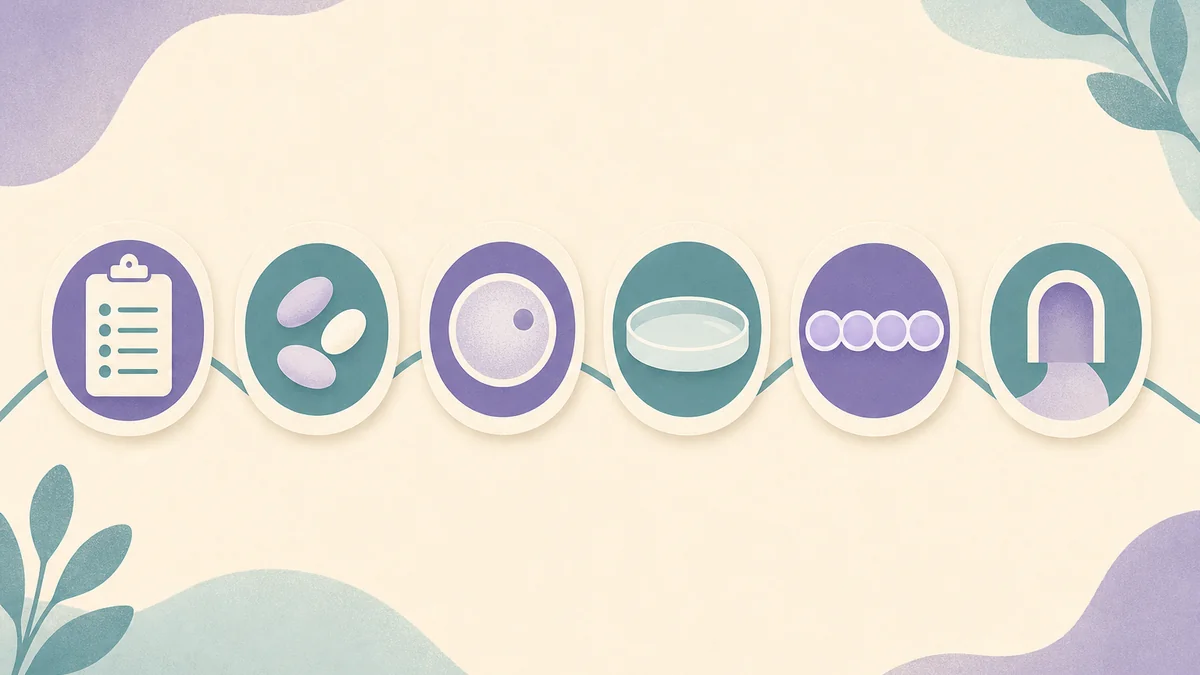
Exact protocols differ by clinic and by person. In broad terms, a cycle often includes:
1. Consultation and tests
You meet a fertility specialist. Blood tests, ultrasound scans, and often a semen analysis help the team understand ovarian reserve, hormone patterns, and sperm health. Further imaging of the uterus or tubes may be recommended. These steps guide whether IVF is appropriate and which approach to use.
2. Ovarian stimulation
Medication encourages the ovaries to mature several eggs in one cycle, rather than the usual single egg. Monitoring with scans and blood tests helps the team adjust care and time the next steps. Side effects can include bloating, headaches, or mood changes; report concerning symptoms promptly.
3. Egg collection
When eggs are ready, they are collected in a short procedure, usually under sedation. Most people go home the same day and rest. The number of eggs retrieved varies; more is not always better—quality and safety matter.
4. Fertilisation in the laboratory
Eggs and prepared sperm are combined. Sometimes a single sperm is injected into an egg (ICSI), especially when sperm factors are significant. Staff later check whether fertilisation has occurred.
5. Embryo development
Embryos grow in the laboratory for several days. Teams observe development and discuss which embryos, if any, are suitable for transfer or freezing. Not every egg becomes an embryo, and not every embryo continues to develop. That is a normal part of biology.
6. Embryo transfer
A selected embryo is placed in the uterus with a thin catheter, usually without general anaesthesia. The procedure is typically brief. Your clinic will explain activity guidance afterwards and when to take a pregnancy test—often about 10–14 days later.
After transfer: the waiting period
The days between transfer and the pregnancy test can feel long. Early home tests may be misleading. Mild cramping or spotting can have many causes. Follow your clinic’s instructions on medication (such as progesterone support, if prescribed) and when to seek urgent help.
Success rates: keep perspective
Live birth rates after IVF vary strongly with age and with clinical details. Public reports such as the CDC’s Assisted Reproductive Technology (ART) data show that outcomes generally decline as age increases, especially after the mid-thirties. A pregnancy test result is not the same as a live birth. Cumulative chances can improve over more than one complete cycle for some people—but there are no guarantees.
For a fuller discussion, see our guide on IVF success rates explained.
A short educational video
The animation below (Nucleus Medical Media) shows follicle aspiration, laboratory fertilisation—including ICSI as one technique—and embryo transfer in general terms. It is not specific to any clinic and is not a substitute for medical advice.
Educational animation describing the general IVF process. Confirm every medical detail with a licensed clinician.
Common questions
Is IVF always painful? Many people describe injections and monitoring as uncomfortable rather than severely painful. Egg collection is done with sedation. Individual experience varies.
Does IVF always work? No. Many cycles do not result in a live birth. Age, diagnosis, and embryo development all influence outcomes.
Are children born after IVF healthy? Large bodies of research support IVF as an established treatment. Any pregnancy carries risks; your clinician can discuss what is known for your situation.
Can you conceive naturally after IVF? Sometimes yes, depending on the underlying diagnosis. Ask your specialist about your own prognosis.
Finding a clinic and next steps
If you are exploring treatment in Spain, you can browse listings and maps on IVF Directory—for example Madrid, Barcelona, or Valencia—and compare publicly listed details. Always verify treatments, languages, and costs directly with the clinic.
Related reading: Preparing for IVF, IVF medications in plain language, and IVF myths versus facts.
Further reading (primary sources)
- CDC — Infertility — Public-health overview of infertility causes, evaluation, and when to seek care.
- CDC — ART (Assisted Reproductive Technology) — US public explanations and reporting on assisted reproductive technology (including IVF).
- ASRM — Patient resources — Patient education from the American Society for Reproductive Medicine.
- ESHRE — Patient information — European patient-facing fertility information from ESHRE.
- RESOLVE — The National Infertility Association — Peer support, advocacy, and education for people facing infertility.