

Male-Factor Infertility and ICSI: A Plain-Language Guide
Semen analysis basics, lifestyle themes, how ICSI works in simple terms, and the emotional side for partners—with trusted sources, no invented rates.

Male-Factor Infertility and ICSI: A Plain-Language Guide
Infertility is often framed as a “women’s issue,” yet sperm factors are a common part of the story—alone or combined with other findings. This guide explains semen analysis and ICSI (intracytoplasmic sperm injection) in everyday language. It does not diagnose you or recommend a protocol.
Disclaimer: This article is for general education only. It is not medical advice, a diagnosis, or a treatment plan. Always discuss your situation with a licensed clinician. IVF Directory lists publicly available clinic information and does not provide success rates or pricing as clinical recommendations.

Infertility can involve sperm, eggs, or both
The WHO and CDC describe infertility as a shared reproductive health concern. Evaluation often includes both partners when a couple is trying to conceive. Male-factor findings do not mean someone “failed”; they are medical information that guides next steps.
Semen analysis in plain language
A semen analysis looks at a sample of semen in the laboratory. Typical themes (names vary by lab) include:
- Volume — how much fluid is produced.
- Concentration — how many sperm are present.
- Motility — how well sperm move.
- Morphology — how sperm are shaped under agreed criteria.
- Other notes — such as signs that prompt further testing.
One sample is a snapshot. Illness, heat, recent fever, medicines, or incomplete collection can change results. Clinicians often repeat tests before drawing firm conclusions. Patient materials from ASRM and ESHRE explain why context matters.
Further evaluation may include hormones, physical examination, genetic tests in selected cases, or imaging—always clinician-directed.
Lifestyle themes (general, not prescriptions)
Teams may discuss smoking cessation, limiting excess alcohol, avoiding recreational drugs, managing heat exposure to the testes when relevant, and reviewing prescription medicines that could affect sperm. These are public-health and clinical conversations—not DIY protocols. Do not stop prescribed medicines without medical advice.
What ICSI means
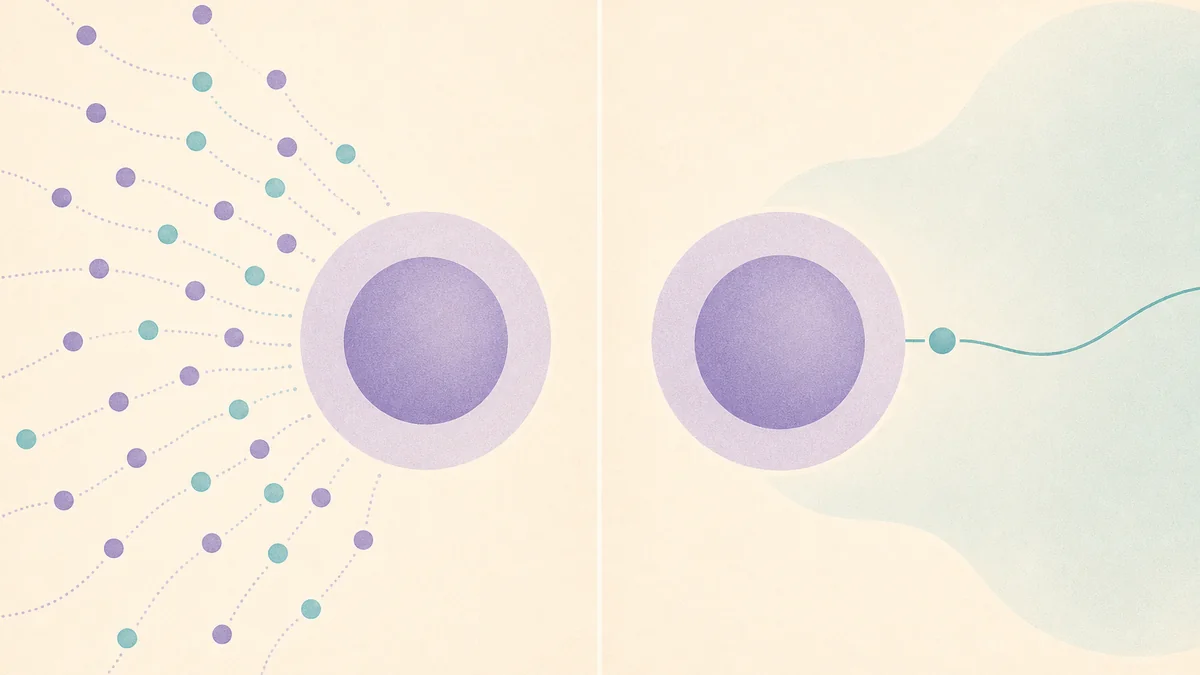
In standard IVF, eggs and sperm are placed together so fertilisation can occur. In ICSI, an embryologist injects a single sperm into an egg using specialised equipment. Clinics may discuss ICSI when sperm numbers, movement, or prior fertilisation problems make conventional IVF less suitable—or in other situations your team explains.
ICSI is a laboratory technique, not a guarantee of pregnancy or live birth. Embryo development and transfer outcomes still vary. Age of the person providing eggs, uterine factors, and embryo quality remain important. See IVF success rates explained for how to read outcome statistics carefully.
The emotional side for partners who provide sperm
Male-factor news can bring shame, silence, or a sense of being “the problem.” Those feelings are common and deserve care. Practical steps:
- Attend appointments when possible; hearing results together reduces second-hand anxiety.
- Ask the clinician to explain findings without jargon.
- Use counselling resources; RESOLVE offers peer and educational support in some regions.
- Remember that producing a sample on demand can be stressful—ask the clinic about private spaces and timing.
Partners who do not provide sperm also need support when donor sperm or surgical sperm retrieval is discussed. For hormonal conditions that can affect ovulation and IVF planning, see PCOS and IVF.
A short educational video
The animation below (Nucleus Medical Media) shows egg collection, laboratory fertilisation—including ICSI as one technique—and embryo transfer in general terms. It is not specific to any clinic.
Educational animation describing the general IVF process, including ICSI as one laboratory method. Confirm every medical detail with a licensed clinician. This video is not a personal treatment plan.
Finding care and next steps
Ask clinics how they evaluate male factor, whether andrology support is on-site, and how they decide between IVF and ICSI. In Spain, browse publicly listed centres via Madrid, Barcelona, or Valencia, then verify pathways directly.
For the overall IVF journey, start with what IVF is.
Further reading (primary sources)
- CDC — Infertility — Public-health overview of infertility causes, evaluation, and when to seek care.
- WHO — Infertility fact sheet — Global definition and context for infertility from the World Health Organization.
- ASRM — Patient resources — Patient education from the American Society for Reproductive Medicine.
- ESHRE — Patient information — European patient-facing fertility information from ESHRE.
- RESOLVE — The National Infertility Association — Peer support, advocacy, and education for people facing infertility.